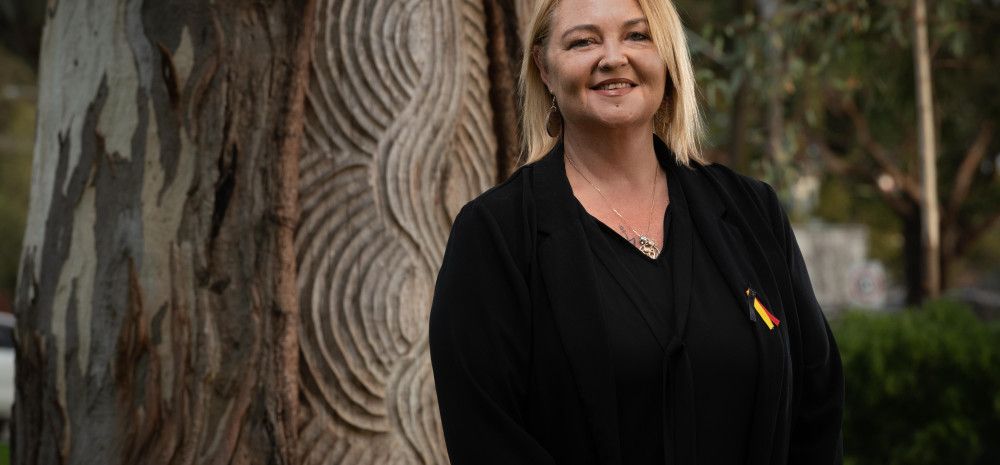
NAIDOC Week begins on 5 July, Bunurong Elder and Dandenong local, Uncle Mark Brown, shares his connection to this year’s theme.
“The theme ‘50 Years of Deadly’ – is not only about honouring the past, but about carrying that strength forward into the future.
Our Elders fought hard so future generations could stand stronger in Culture, language, identity, and pride. They carried stories, knowledge, and resistance through some of the hardest times this country has seen. NAIDOC is about acknowledging that sacrifice and resilience — but also asking ourselves what we do with that legacy now.
For me, the future means our young people growing up proud of who they are, connected to Country, language, and community. It also means walking together respectfully — where truth, understanding, and reconciliation are lived through action, not just words.
When I come up against racism, I remind myself why I do this work in the first place. I think about my ancestors, my Elders, and the generations before me who endured far worse so we could still stand here today speaking language, sharing Culture, and practicing ceremony. That strength runs through all of us.
I also focus on the people who are listening, learning, and genuinely wanting to connect. For every loud voice filled with hate, there are many more people wanting understanding and respect. Culture teaches us resilience, patience, and responsibility. I try not to carry anger — I carry purpose. Positivity comes from knowing that culture is still alive, our people are still strong, and the next generation is watching how we respond.
This NAIDOC Week, I would like the broader Greater Dandenong community to understand that Aboriginal culture is not history locked in the past — it is living, evolving, and strong. I’d also like people to understand that reconciliation is not about guilt — it is about respect, listening, truth, and relationship. It happens when people sit together, listen to one another, and walk forward with mutual respect.
Everyone can be part of reconciliation through these small, genuine actions that build stronger communities:
• Taking time to learn about the Traditional Owners and the history of the Country they live on
• Attending Aboriginal-led events, workshops, and cultural experiences
• Supporting Aboriginal artists, businesses, and organisations
• Listening openly to First Nations voices and experiences
• Creating culturally safe and welcoming spaces in schools, workplaces, and community settings
• Teaching children respect, inclusion, and truth from an early age
• Moving beyond symbolic gestures into ongoing relationships and action."
The people of the Kulin Nations say ‘Murrup’ to describe a person’s spirit or energy. For Bunurong and Palawa woman, Jillian West, NAIDOC Week is about sharing stories that open that energy in people and connect them with the oldest living culture in the world.
“What has been done so far was only possible because people had a voice and refused to be silent. Everyone has a reconciliation journey, and NAIDOC week is another opportunity to bring our country together with acknowledgement and storytelling.
Understanding where we came from helps us to recognise where we are. We can’t change the past, we acknowledge it, and we move forward for our ancestors that come before us and our future generations.
When I come across people who don’t want to listen, I keep moving forward because I think of my ancestors. Nothing compares to hardship and adversity our people faced for 200 years plus... not being considered citizens, not even being considered humans until 1967, and our babies being taken away from their families. We couldn’t speak language or express our cultural ways of living and caring for Country.
My Dad didn’t finish grade 5. He later became a teacher, did a philosophy doctorate at University and wrote a thesis on embedding our ways of teaching into western life. That is still taught today.
My Dad is the reason I do what I do. He always said, ‘It is not your right to understand but it is your obligation to accept difference.’ This means – Are you open to sharing and learning about our stories and storytelling and embedding that in everyday life?
This country is home to the oldest living culture in the world. How lucky are we? We are still here, we are still sharing and teaching. On NAIDOC Week, I imagine if all people connected deeply with each other and country in the way we do as Aboriginal people. What an even more beautiful country that would be. Then I ask myself, what can we do now?”